


Topkapi Palace Library: History, Architecture & Info
Inside the Third Courtyard of Topkapi Palace stands the Topkapi Palace Library, a refined structure often called the Library of Ahmed III or the Enderun Library. Rather than showcasing power or ceremony, this building represents the Ottoman court’s commitment to scholarship and intellectual life.
Constructed in the early 1700s, it functioned as a study space for students of the Enderun School, where future officials were trained. Today, it survives as both an architectural highlight and a reminder that education played a central role within the palace walls.
What Is the Topkapi Palace Library?
The Topkapi Palace Library is a standalone library building located in the Third Courtyard, behind the Audience Chamber. It was commissioned by Sultan Ahmed III and completed in 1719 as part of a broader effort to promote scholarship, literature, and education within the palace.
Rather than serving the general public, the library was intended for members of the Enderun School and selected palace officials. The collection included works on theology, law, literature, history, science, and other subjects written in Ottoman Turkish, Arabic, and Persian.
Highlights of the Topkapi Palace Library
The Topkapi Palace Library is more than a historic reading room. Its architecture, educational role, and manuscript collection provide valuable insight into the intellectual life of the Ottoman court and the importance placed on learning within the palace.
Tulip Period Architecture
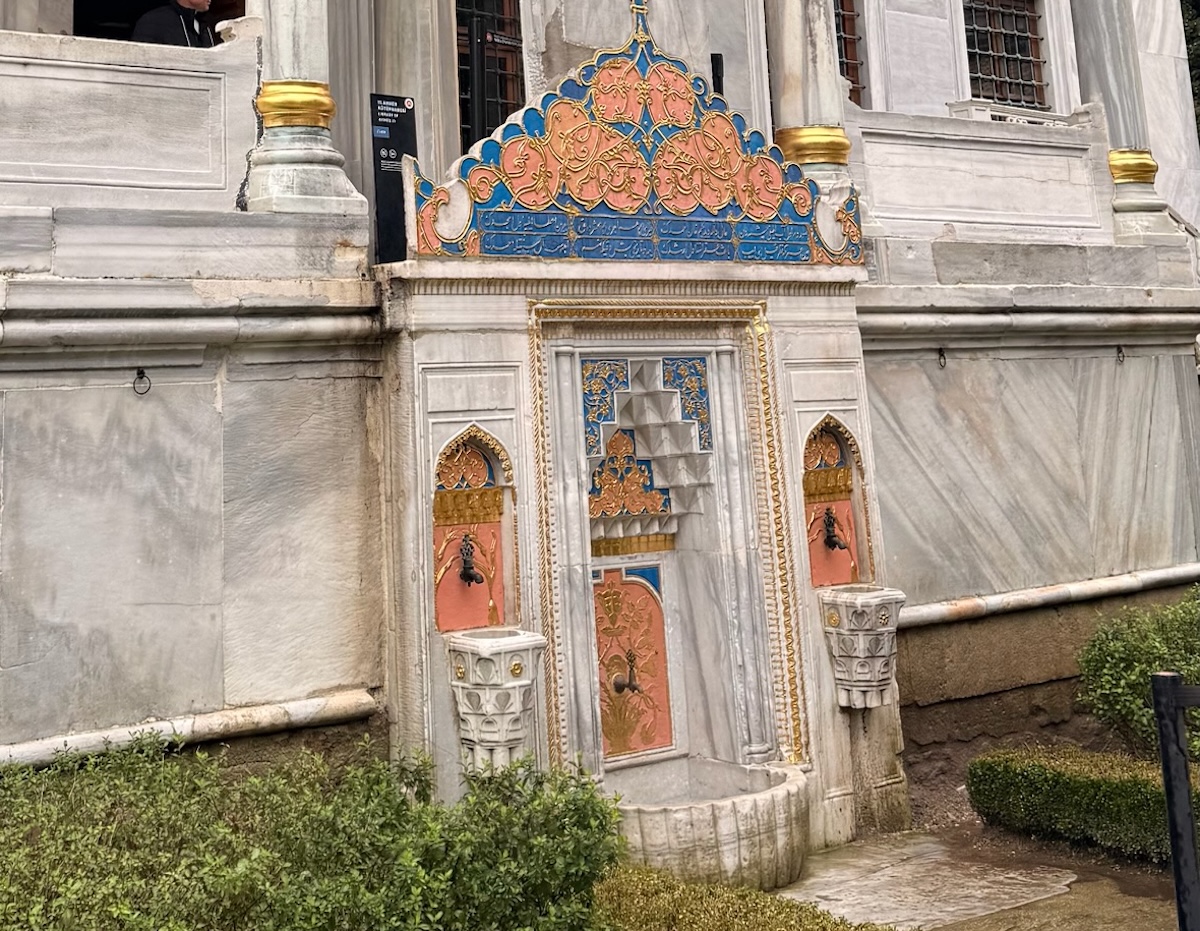
The library is considered one of the finest examples of Tulip Period architecture within Topkapi Palace. Built during the reign of Sultan Ahmed III, it reflects the artistic tastes of the early 18th century through its elegant proportions, central dome, decorative details, and carefully planned layout. These features distinguish it from many of the palace's earlier structures.
The Enderun School
The library served the Enderun School, the elite institution responsible for educating future Ottoman administrators, diplomats, military commanders, and palace officials. Students trained in a wide range of subjects and used the library as a place for study and research, making it an important part of the palace's educational system.
Historic Manuscript Collection
For centuries, the library housed thousands of manuscripts covering theology, law, literature, history, science, and philosophy. Written primarily in Ottoman Turkish, Arabic, and Persian, these works formed one of the most important scholarly collections within the palace and reflected the intellectual interests of the Ottoman court.
Sultan's Reading Space
The library was designed not only for students and scholars but also for the Sultan himself. Historical accounts describe dedicated reading areas within the building, highlighting the role of books and scholarship in palace life. This connection adds a personal dimension to the library and distinguishes it from many other structures within Topkapi Palace.
Topkapi Palace Library Architecture
The Topkapi Palace Library is regarded as one of the finest examples of Tulip Period architecture within the palace complex. Completed in 1719, the building combines elegant design with practical features intended to create a suitable environment for study and manuscript preservation.
Key architectural characteristics include:
Despite its relatively modest size, the library occupies a prominent position within the Third Courtyard and remains one of the most distinctive buildings in this section of Topkapi Palace.
Top Bestseller Topkapi Palace Ticket with Harem
Skip the ticket lines and discover the highlights of Topkapi Palace and its legendary Harem on a 90-minute guided tour led by an English-speaking guide. + more details
Top Bestseller Topkapi Palace Ticket without Harem
Save time with guided entry and skip-the-ticket-line access to Topkapi Palace. After a smooth entry with a licensed guide, explore the palace independently using a multilingual audio guide on your smartphone. + more details
Best Istanbul Combo Guided Tours including Topkapi Palace
Explore Istanbul’s most iconic landmarks on a comprehensive 6-hour guided tour. Visit Topkapi Palace and its legendary Harem, then continue to Hagia Sophia and the Blue Mosque with an expert guide. Skip the ticket purchase lines and uncover the fascinating Ottoman and Byzantine history behind these must-see sights. + more details
See Istanbul’s legendary landmarks in one easy booking, from the grand Topkapı Palace and Harem to Hagia Sophia and the atmospheric Basilica Cistern. Join guided tours and uncover the stories behind some of the city’s most remarkable historic sites. + more details
Best Value Combo Tickets for Topkapi Palace
Discover two of Istanbul's highlights with this value-packed combo. Enjoy skip-the-line entry to Topkapi Palace, including access to the legendary Harem and a multilingual audio guide, before setting off on a scenic 90-minute Bosphorus cruise. + more details
Explore two of Istanbul's most iconic landmarks with one value-packed combo, featuring skip-the-line access to Topkapi Palace and the Basilica Cistern, multilingual audio guides, and helpful digital city guides. + more details
Save time with one convenient combo ticket to Topkapi Palace and Hagia Sophia, including skip-the-line access, multilingual audio guides, and helpful digital city guides. + more details
Frequently Asked Questions (FAQ) About the Topkapi Palace Library
What to see inside the Topkapi Palace Library?
Inside the Topkapi Palace Library, visitors can admire its elegant Ottoman architecture, including richly decorated interiors, intricate tile work, and beautifully crafted wooden details. The space reflects the refined aesthetic of the Tulip Period, with large windows that allow natural light to illuminate the reading area. Although the original manuscripts are no longer housed here, the building itself offers a glimpse into the scholarly environment of the Enderun School.
→ To explore more highlights across the palace, read more about what to see inside Topkapi Palace.
Where is the Topkapi Palace Library located?
The Topkapi Palace Library is located in the Third Courtyard of Topkapi Palace, behind the Audience Chamber (Arz Odası). Its central position makes it easy to find while exploring this section of the palace. The building forms part of the standard visitor route and can be viewed during a regular visit to the museum.
Who built the Topkapi Palace Library?
The Topkapi Palace Library was commissioned by Sultan Ahmed III and completed in 1719 during the Tulip Period. It was constructed to support education and scholarship within the palace, particularly for students of the Enderun School. The building remains one of the most important architectural projects associated with Ahmed III's reign.
Are the original books still inside the Topkapi Palace Library?
No, the original manuscript collection is no longer stored inside the library building. Over time, the manuscripts were transferred to dedicated repositories for preservation and research.
Do you need a separate ticket to visit the Topkapi Palace Library?
No, a separate ticket is not required. The library is included within the standard Topkapi Palace visitor route and can be accessed with a regular palace admission ticket. Visitors can view the building while exploring the Third Courtyard and its surrounding attractions.
How much time do you need to visit the Topkapi Palace Library?
Most visitors spend between 5 and 10 minutes at the Topkapi Palace Library. The building is relatively compact and is typically viewed as part of a broader tour of the Third Courtyard. Visitors with a particular interest in Ottoman architecture or history may choose to spend additional time examining its details.