


Topkapi Palace History
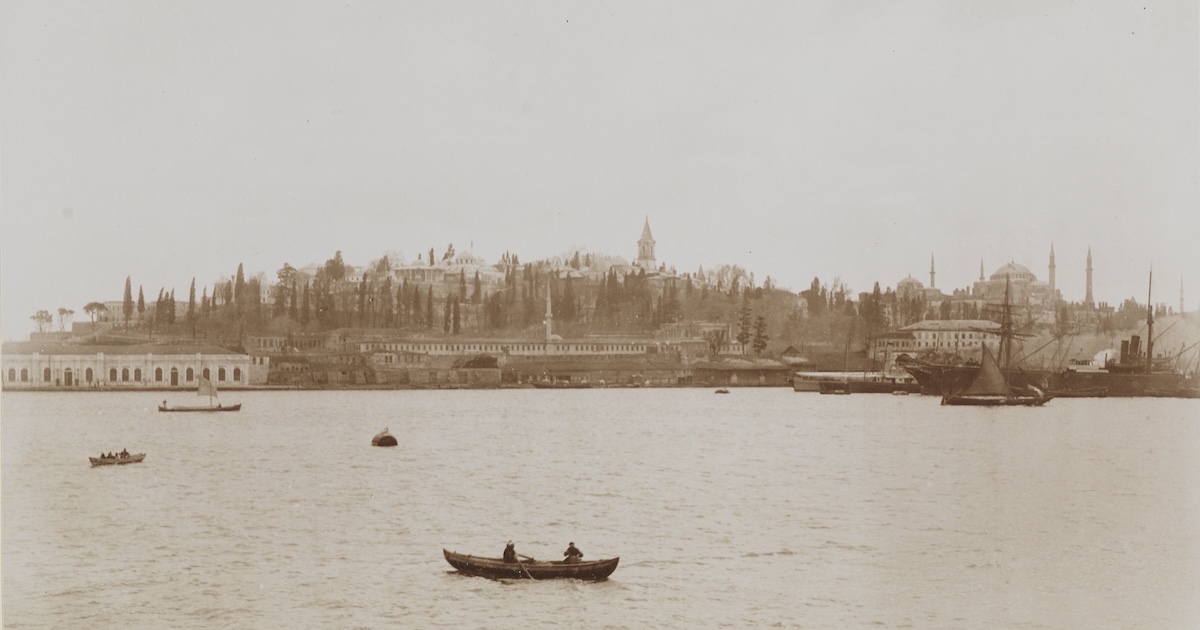
Topkapi Palace history spans nearly six centuries, from the early years of Ottoman rule in Constantinople to its transformation into one of Türkiye's most important museums. Constructed shortly after the Ottoman conquest of the city, the palace served as the political, administrative, and ceremonial center of the Ottoman Empire for almost 400 years. Successive sultans expanded the complex, added new buildings, and shaped the institution that governed a vast empire stretching across three continents.
Today, Topkapi Palace remains one of the most significant surviving monuments of Ottoman history and culture.
Brief History of Topkapi Palace
Year | Event |
|---|---|
1453 | Sultan Mehmed II conquers Constantinople and establishes Ottoman rule over the city. |
1460s | Construction of Topkapi Palace begins on the historic peninsula overlooking the Bosphorus. |
1478 | The palace is largely completed and becomes the primary residence of the Ottoman sultans. |
1517 | Islamic holy relics enter the Ottoman collection following the conquest of the Mamluk Sultanate. |
1520–1566 | Major expansions take place during the reign of Suleiman the Magnificent. |
17th–18th Centuries | The palace continues to grow with new pavilions, institutions, and ceremonial spaces. |
1719 | The Library of Ahmed III is completed during the Tulip Period. |
1856 | The Ottoman court relocates to Dolmabahçe Palace. |
1924 | Topkapi Palace officially opens as a museum. |
In-Depth Overview of Topkapi Palace History
The history of Topkapi Palace extends far beyond a series of dates and events. Over nearly four centuries, the complex grew from a newly constructed imperial residence into a vast center of government, court life, religion, and culture. Each period introduced new buildings, institutions, and traditions that contributed to the palace's development and historical significance.
The Foundation of Topkapi Palace
Following the Ottoman conquest of Constantinople in 1453, Sultan Mehmed II sought a new imperial residence that would reflect the empire's growing power. Construction of Topkapi Palace began in the 1460s on a prominent site overlooking the Bosphorus, the Golden Horn, and the Sea of Marmara. The palace gradually replaced the earlier Old Palace and became the administrative and residential heart of the Ottoman state.
The Palace Becomes the Center of the Ottoman Empire
By the late 15th century, Topkapi Palace had developed into far more than a royal residence. It housed the Imperial Council, treasury, administrative offices, ceremonial courtyards, and residential quarters for palace officials. Decisions affecting vast territories across Europe, Asia, and Africa were made within its walls, establishing Topkapi as the political center of one of history's largest empires.
The Rise of the Imperial Harem
During the 16th century, the Imperial Harem evolved into one of the most influential institutions within Topkapi Palace. As members of the royal family increasingly resided within the complex, the Harem expanded significantly and became a central part of court life. Beyond its residential function, it also played an important political role, with powerful royal women often exercising considerable influence within the Ottoman court.
Expansion During the Golden Age
The reign of Sultan Suleiman the Magnificent marked one of the most important periods in Topkapi Palace history. As the Ottoman Empire reached the height of its territorial expansion and international influence, the palace grew in both size and importance. New buildings, ceremonial spaces, and residential sections were added, creating much of the layout that visitors recognize today.
Cultural and Religious Significance
Topkapi Palace was not only a center of government but also an important cultural and religious institution. The palace housed valuable manuscripts, imperial collections, and workshops that supported artistic production throughout the empire. Following the Ottoman acquisition of the Islamic holy cities in 1517, sacred relics associated with Islamic history were also preserved within the palace, further enhancing its symbolic significance.
The Move to Dolmabahçe Palace
By the 19th century, changing political priorities and new architectural tastes encouraged the Ottoman court to seek a more modern residence. In 1856, Sultan Abdülmecid I moved the imperial court to Dolmabahçe Palace on the Bosphorus. Although Topkapi Palace retained ceremonial and symbolic importance, it gradually ceased to function as the primary center of imperial administration.
From Imperial Residence to Museum
Following the establishment of the Republic of Türkiye, the palace was converted into a museum and officially opened to the public in 1924. Recognition of its historical importance continued throughout the 20th century, and in 1985 Topkapi Palace became part of the UNESCO-listed Historic Areas of Istanbul [Source: UNESCO]. Its courtyards, pavilions, and collections remain among the most significant surviving monuments of the Ottoman world.
Construction and Architecture of Topkapi Palace
Construction of Topkapi Palace began during the reign of Sultan Mehmed II in the 1460s and continued in phases for centuries as successive rulers expanded the complex. Unlike many European palaces built as a single monumental structure, Topkapi developed organically around a sequence of courtyards connected by ceremonial gates. This arrangement reflected the administrative and social hierarchy of the Ottoman court, with access becoming increasingly restricted toward the innermost sections.
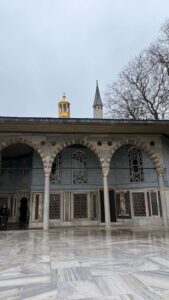
Architecturally, the palace combines elements of early Ottoman design with additions from later periods. Domed chambers, tiled interiors, pavilions, gardens, fountains, and columned courtyards characterize the complex. Structures such as the Imperial Harem, Baghdad Pavilion, Revan Pavilion, and Library of Ahmed III illustrate how the palace evolved between the 15th and 19th centuries.


Top Bestseller Topkapi Palace Ticket with Harem
Skip the ticket lines and discover the highlights of Topkapi Palace and its legendary Harem on a 90-minute guided tour led by an English-speaking guide. + more details
Top Bestseller Topkapi Palace Ticket without Harem
Save time with guided entry and skip-the-ticket-line access to Topkapi Palace. After a smooth entry with a licensed guide, explore the palace independently using a multilingual audio guide on your smartphone. + more details
Best Istanbul Combo Guided Tours including Topkapi Palace
Explore Istanbul’s most iconic landmarks on a comprehensive 6-hour guided tour. Visit Topkapi Palace and its legendary Harem, then continue to Hagia Sophia and the Blue Mosque with an expert guide. Skip the ticket purchase lines and uncover the fascinating Ottoman and Byzantine history behind these must-see sights. + more details
See Istanbul’s legendary landmarks in one easy booking, from the grand Topkapı Palace and Harem to Hagia Sophia and the atmospheric Basilica Cistern. Join guided tours and uncover the stories behind some of the city’s most remarkable historic sites. + more details
Best Value Combo Tickets for Topkapi Palace
Discover two of Istanbul's highlights with this value-packed combo. Enjoy skip-the-line entry to Topkapi Palace, including access to the legendary Harem and a multilingual audio guide, before setting off on a scenic 90-minute Bosphorus cruise. + more details
Explore two of Istanbul's most iconic landmarks with one value-packed combo, featuring skip-the-line access to Topkapi Palace and the Basilica Cistern, multilingual audio guides, and helpful digital city guides. + more details
Save time with one convenient combo ticket to Topkapi Palace and Hagia Sophia, including skip-the-line access, multilingual audio guides, and helpful digital city guides. + more details
Frequently Asked Questions (FAQ) About Topkapi Palace History
How did Topkapi Palace get its name?
Topkapi Palace takes its name from a nearby seaside gate known as the "Topkapı" or "Cannon Gate." Although the palace was originally known as the New Palace (Saray-ı Cedid-i Âmire), the name Topkapı gradually became associated with the complex over time. The nearby gate no longer exists, but its name remains linked to the palace today.
What is the history behind Topkapi Palace?
Topkapi Palace was established in the 15th century as the residence and administrative center of the Ottoman Empire. Construction began under Sultan Mehmed II following the Ottoman conquest of Constantinople in 1453. For nearly four centuries, the palace served as the center of imperial government, court life, diplomacy, and ceremony before the Ottoman court relocated to Dolmabahçe Palace in the 19th century.
Is Topkapi Palace a UNESCO World Heritage Site?
Topkapi Palace is part of the UNESCO-listed Historic Areas of Istanbul. The Historic Areas of Istanbul were inscribed on the UNESCO World Heritage List in 1985 due to their exceptional historical and cultural significance. The designation includes Topkapi Palace along with several other major landmarks of the historic city.
Who built Topkapi Palace?
Topkapi Palace was commissioned by Sultan Mehmed II, also known as Mehmed the Conqueror. Construction began in the 1460s after the Ottoman conquest of Constantinople and continued through several phases. Later sultans expanded the complex, but Mehmed II established the palace as the new imperial center of the Ottoman Empire.
Is a Topkapi Palace guided tour worth it?
A Topkapi Palace guided tour can be worthwhile for visitors interested in the history and function of the palace. The complex contains numerous courtyards, pavilions, institutions, and collections whose significance is not always immediately apparent. A knowledgeable guide can provide historical context about the Ottoman court, important events, and the purpose of different sections within the palace.
→ Explore Topkapi Palace tour options.