


Topkapi Palace Relics: The Chamber of the Holy Relics
The Topkapi Palace relics form one of the most significant collections of Islamic heritage in the world. Preserved within the Chamber of the Holy Relics (Kutsal Emanetler Dairesi), the collection contains sacred objects associated with the Prophet Muhammad, earlier prophets recognized in Islamic tradition, and Islam's holiest sites.
For centuries, Ottoman sultans served as the guardians of these sacred trusts, preserving them within the palace as a symbol of their role as Caliphs and protectors of the faith. Today, the Topkapi Palace relics remain one of the most important religious exhibitions in Türkiye and offer visitors a rare connection to the spiritual and historical foundations of the Islamic world.
What Are the Topkapi Palace Relics?
The Topkapi Palace relics are a collection of sacred Islamic artifacts preserved within the Third Courtyard of Topkapi Palace. The collection includes relics associated with the Prophet Muhammad, objects connected to earlier prophets, and sacred items transferred from Mecca and Medina during the Ottoman period.
Unlike the Imperial Treasury, which focuses on royal wealth and ceremonial objects, the Chamber of the Holy Relics was created to preserve items of religious significance. As a result, it became one of the most revered spaces within the palace and played an important role in the spiritual identity of the Ottoman court.
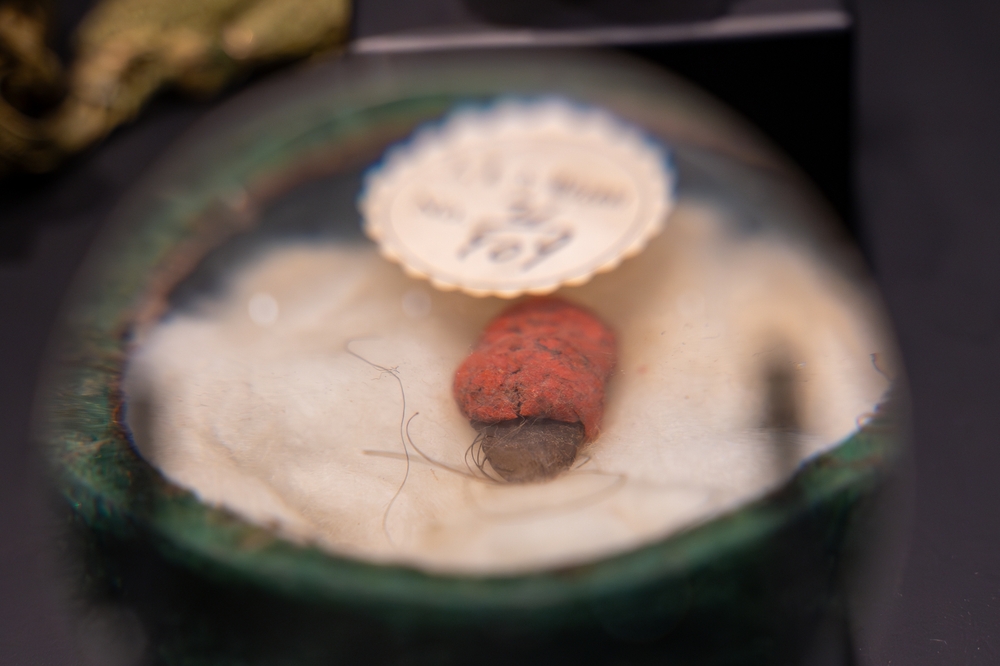
A hair from Prophet Muhammad's beard in the Sacred Relics of Topkapi Palace.
Highlights of the Topkapi Palace Relics
The Chamber of the Holy Relics is not a single exhibition hall but a series of interconnected rooms, each displaying different categories of sacred objects. Together, these chambers contain some of the most revered relics preserved by the Ottoman Empire.
THE DESTIMAL CHAMBER (DESTIMAL ODASI)
The Destimal Chamber displays relics traditionally associated with prophets recognized in Islamic tradition. Many of the collection's oldest and most revered objects are preserved here.
The Fountain Hall (Şadırvanlı Sofa)
This chamber houses sacred objects connected to Mecca and Medina, reflecting the Ottoman Empire's historical role as guardian of Islam's holiest cities.
The Audience Chamber (Arzhane)
The Audience Chamber contains several personal relics traditionally associated with the Prophet Muhammad and is among the most visited areas of the exhibition.
The Chamber of the Blessed Mantle (Hırka-i Saadet Dairesi)
The Chamber of the Blessed Mantle is the most sacred room within the entire collection and contains the relics that hold the greatest religious significance.
History of the Topkapi Palace Relics
The foundations of the Holy Relics collection were established in 1517 during the reign of Sultan Selim I. Following the Ottoman conquest of the Mamluk Sultanate, the empire assumed responsibility for the holy cities of Mecca and Medina and acquired numerous sacred objects associated with Islamic history.
These relics were transferred to Topkapi Palace, where they were preserved within a dedicated section of the imperial residence. Over the following centuries, additional relics entered the collection through gifts, transfers, and imperial patronage, gradually creating one of the most important collections of Islamic relics in the world.
Is It Worth Visiting the Topkapi Palace Relics?
Yes, it is definitely worth visiting the Topkapi Palace relics. The Chamber of the Holy Relics offers an experience unlike any other part of Topkapi Palace. While much of the palace focuses on imperial power, royal ceremonies, and court life, this section centers on objects that held deep religious significance for the Ottoman sultans and the wider Islamic world.
The atmosphere is noticeably different from the Imperial Treasury or the Harem. Quran recitation, historic surroundings, and the presence of revered relics create a quieter and more reflective environment than a typical museum exhibition.
Important Information About the Topkapi Palace Relics
Before visiting the Chamber of the Holy Relics, there are a few practical details worth keeping in mind. The collection differs from other sections of Topkapi Palace due to its religious significance and visitor guidelines.
Top Bestseller Topkapi Palace Ticket with Harem
Skip the ticket lines and discover the highlights of Topkapi Palace and its legendary Harem on a 90-minute guided tour led by an English-speaking guide. + more details
Top Bestseller Topkapi Palace Ticket without Harem
Save time with guided entry and skip-the-ticket-line access to Topkapi Palace. After a smooth entry with a licensed guide, explore the palace independently using a multilingual audio guide on your smartphone. + more details
Best Value Combo Tickets for Topkapi Palace
Discover two of Istanbul's highlights with this value-packed combo. Enjoy skip-the-line entry to Topkapi Palace, including access to the legendary Harem and a multilingual audio guide, before setting off on a scenic 90-minute Bosphorus cruise. + more details
Explore two of Istanbul's most iconic landmarks with one value-packed combo, featuring skip-the-line access to Topkapi Palace and the Basilica Cistern, multilingual audio guides, and helpful digital city guides. + more details
Save time with one convenient combo ticket to Topkapi Palace and Hagia Sophia, including skip-the-line access, multilingual audio guides, and helpful digital city guides. + more details
Explore Hagia Sophia, Topkapi Palace, and the Basilica Cistern with one flexible 3-in-1 combo, including skip-the-line access, a multilingual audio guide, and the freedom to visit over 3 days. + more details
Frequently Asked Questions (FAQ) About the Topkapi Palace Relics
What are the Topkapi Palace relics?
The Topkapi Palace relics are a collection of sacred objects preserved within the Chamber of the Holy Relics at Topkapi Palace. The collection includes relics associated with the Prophet Muhammad, earlier prophets recognized in Islamic tradition, and sacred objects from Mecca and Medina. Many of these items were transferred to Ottoman protection during the 16th century and have remained in the palace ever since.
Where are the Topkapi Palace relics located?
The Topkapi Palace relics are located in the Chamber of the Holy Relics within the Third Courtyard of Topkapi Palace. The collection is displayed across several interconnected rooms, each housing different categories of sacred objects. Visitors can access the chamber as part of the standard palace route while exploring the museum.
How much time do you need to visit the Sacred Relics of Topkapi Palace?
Most visitors spend around 30 minutes to an hour exploring the Chamber of the Holy Relics, depending on their level of interest and the crowd size. Those who wish to read detailed descriptions or take their time observing each item may need a bit longer.
Are the Topkapi Palace relics worth visiting?
Yes, the Topkapi Palace relics are considered worth visiting, especially for those interested in religious history and cultural heritage. The Chamber of the Holy Relics houses a unique collection of sacred objects associated with the Prophet Muhammad and other important figures in Islamic tradition. For many visitors, the experience offers a meaningful and educational insight into the spiritual significance these relics hold, making it a memorable part of a visit to Topkapi Palace.
Can non-Muslims visit the Chamber of the Holy Relics?
Yes, non-Muslims can visit the Chamber of the Holy Relics. The collection forms part of the Topkapi Palace Museum and is open to visitors regardless of religious background. As the relics are considered sacred by many people, visitors are expected to behave respectfully while exploring the exhibition.
Do you need a separate ticket to see the Topkapi Palace relics?
No, you do not need a separate ticket to see the Topkapi Palace relics. The Chamber of the Holy Relics is included within the main Topkapi Palace museum route and can be visited with a standard palace admission ticket. Visitors should always check current ticket conditions before their visit, as admission policies may change over time.
→ Explore the curated selection of Topkapi Palace ticket options.