


Topkapi Dagger: History, Facts, and Significance
The Topkapi Dagger is one of the most famous treasures displayed inside Topkapi Palace and is widely regarded as one of the finest examples of Ottoman jewelry and metalwork. Decorated with emeralds, gold, and precious stones, the dagger is among the highlights of the Imperial Treasury and remains one of the palace's most photographed artifacts.
Visitors from around the world come to admire the Topkapi Dagger alongside other treasures of the Ottoman Empire, making it a must-see highlight for anyone exploring the palace and its rich historical collections.
What Is the Topkapi Dagger?
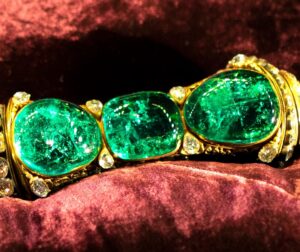
The Topkapi Dagger is an ornate ceremonial weapon known for its exceptional craftsmanship and luxurious design. Made of gold, it is adorned with three large emeralds set into the hilt and a fourth concealed in the pommel, along with additional diamonds and precious stones that highlight the skill of Ottoman artisans.
One of its most distinctive features is a small watch hidden within the pommel, adding both intrigue and sophistication to the piece. Although shaped like a weapon, it was intended as a display of wealth and artistry.
Key Facts About the Topkapi Dagger
Feature | Details |
|---|---|
Type | Ceremonial dagger |
Material | Gold, emeralds, diamonds, and precious stones |
Notable Feature | Three large emeralds on the hilt and a concealed watch in the pommel |
Commissioned For | Nader Shah of Persia |
Period | 18th century (c. 1740s) |
Location | Imperial Treasury, Topkapi Palace |
Commissioned By | Sultan Mahmud I |
Status | One of the most famous treasures displayed at Topkapi Palace |
History of the Topkapi Dagger
The Topkapi Dagger was commissioned in the 1740s during the reign of Sultan Mahmud I and was intended as a diplomatic gift for Nader Shah, the ruler of Persia. At the time, relations between the Ottoman Empire and Persia were of considerable political importance, and valuable gifts often played a role in diplomatic exchanges. The dagger was therefore created to demonstrate the wealth, craftsmanship, and prestige of the Ottoman court.
Before the gift could be delivered, Nader Shah was assassinated in 1747. As a result, the dagger never reached its intended recipient and remained within the Ottoman imperial collection. It was subsequently preserved in the Treasury at Topkapi Palace and later became part of the museum collection, where it remains on display today.
Design & Features of the Topkapi Dagger
The Topkapi Dagger is regarded as one of the finest surviving examples of Ottoman decorative arts. Its design combines precious materials, intricate craftsmanship, and luxury details that were intended to impress foreign rulers and demonstrate the wealth of the Ottoman court.


Visiting the Topkapi Dagger
The Topkapi Dagger is displayed in the Imperial Treasury, located in the Third Courtyard of Topkapi Palace. The Treasury is one of the most visited sections of the palace, and the room containing the dagger can become crowded during peak hours. For the best experience, check the opening hours before your visit and aim to arrive early or later in the afternoon to avoid congestion.
The dagger is displayed alongside other major treasures in the Imperial Treasury collection, making it easy to combine with other highlights of the palace visit.
→ For more on the Imperial Treasury collection, see the Spoonmaker's Diamond.
Top Bestseller Topkapi Palace Ticket with Harem
Skip the ticket lines and discover the highlights of Topkapi Palace and its legendary Harem on a 90-minute guided tour led by an English-speaking guide. + more details
Top Bestseller Topkapi Palace Ticket without Harem
Save time with guided entry and skip-the-ticket-line access to Topkapi Palace. After a smooth entry with a licensed guide, explore the palace independently using a multilingual audio guide on your smartphone. + more details
Best Istanbul Combo Guided Tours including Topkapi Palace
Explore Istanbul’s most iconic landmarks on a comprehensive 6-hour guided tour. Visit Topkapi Palace and its legendary Harem, then continue to Hagia Sophia and the Blue Mosque with an expert guide. Skip the ticket purchase lines and uncover the fascinating Ottoman and Byzantine history behind these must-see sights. + more details
Save time and simplify your Istanbul sightseeing with one flexible ticket covering three iconic attractions. Skip the ticket lines at Topkapi Palace, Hagia Sophia, and the Basilica Cistern, explore with multilingual audio guides, and use your ticket over 3 days. + more details
Best Value Combo Tickets for Topkapi Palace
Discover two of Istanbul's highlights with this value-packed combo. Enjoy skip-the-line entry to Topkapi Palace, including access to the legendary Harem and a multilingual audio guide, before setting off on a scenic 90-minute Bosphorus cruise. + more details
Explore two of Istanbul's most iconic landmarks with one value-packed combo, featuring skip-the-line access to Topkapi Palace and the Basilica Cistern, multilingual audio guides, and helpful digital city guides. + more details
Save time with one convenient combo ticket to Topkapi Palace and Hagia Sophia, including skip-the-line access, multilingual audio guides, and helpful digital city guides. + more details
Frequently Asked Questions (FAQ) About the Topkapi Dagger
What is the Topkapi Dagger?
The Topkapi Dagger is an ornate 18th-century ceremonial dagger displayed in the Imperial Treasury of Topkapi Palace. Made with gold, emeralds, diamonds, and other precious stones, it is considered one of the finest examples of Ottoman court craftsmanship.
Why is the Topkapi Dagger famous?
The Topkapi Dagger is famous for its luxurious design, large emeralds, hidden watch, and unusual history. It was originally created as a diplomatic gift for Nader Shah of Persia but remained in the Ottoman imperial collection after his assassination.
Where can you see the Topkapi Dagger?
You can see the Topkapi Dagger inside the Imperial Treasury at Topkapi Palace in Istanbul. The Treasury also displays other important Ottoman treasures, making it one of the most popular sections for visitors exploring the palace.
Who commissioned the Topkapi Dagger?
The dagger was commissioned by Sultan Mahmud I in the 1740s. It was intended as a diplomatic gift for Nader Shah, the ruler of Persia, during a period when luxury objects were often used in political exchanges between rulers.
Do you need a separate ticket to see the Topkapi Dagger?
No. The Topkapi Dagger is displayed inside the Imperial Treasury of Topkapi Palace and can be viewed as part of a regular palace visit. Since ticket inclusions and access arrangements may change over time, it is always worth checking the latest admission details before your visit.