


Topkapi Palace Courtyards: The Four Historic Courtyards of Topkapi Palace
The Topkapi Palace courtyards form the heart of the palace complex and reflect the organization of the Ottoman Empire. Built around four interconnected courtyards, the palace led visitors from public spaces to increasingly private areas. These courtyards served as ceremonial grounds, administrative centers, gathering places, and gardens. Access became more restricted deeper inside the palace.
Today, they remain central to visits, linking major attractions such as the Harem, Treasury, Sacred Relics, Palace Kitchens, Library of Ahmed III, and Bosphorus-view pavilions.
What Are the Topkapi Palace Courtyards?
The Topkapi Palace courtyards were designed to organize movement through the palace while reinforcing the strict hierarchy of the Ottoman state. Each courtyard had a specific function and was accessible only to certain groups of people.
The outer courtyards were used for public activities, administration, and palace services, while the inner courtyards became progressively more exclusive. By the time visitors reached the Third and Fourth Courtyards, they had entered the most private and important areas of the palace.
Together, the four courtyards created a carefully structured transition from the public world outside the palace walls to the private world of the Ottoman Sultan and his household.
Courtyard | Main Function |
|---|---|
First Courtyard | Public access area and palace services |
Second Courtyard | Government administration and palace operations |
Third Courtyard | Ceremonial and residential center of the palace |
Fourth Courtyard | Private gardens, pavilions, and leisure spaces |
First Courtyard (Court of the Janissaries)
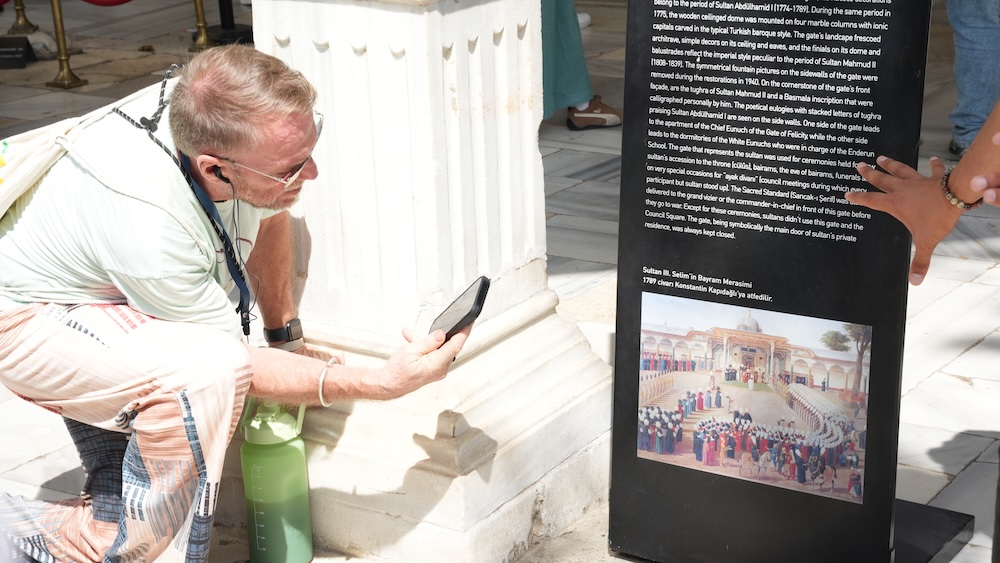
The First Courtyard, also known as the Court of the Janissaries, was the only part of Topkapi Palace open to the general public during the Ottoman period. Entered through the Imperial Gate (Bab-ı Hümayun), it served as a gathering space for soldiers, officials, craftsmen, and visitors. As the largest courtyard, it contained gardens, service buildings, and facilities that supported the daily operation of the palace complex.
What to See in the First Courtyard:


Why was it important? The First Courtyard served as the public face of Topkapi Palace and formed a transition zone between the city and the imperial residence.
Second Courtyard (Divan Square)
The Second Courtyard was the administrative center of Topkapi Palace and the place where many state affairs were conducted. Accessed through the Gate of Salutation (Babüsselam), it was reserved for officials, palace staff, and invited guests. Surrounded by government chambers, kitchens, and service buildings, this courtyard played a central role in the daily administration of the Ottoman Empire.
What to See in the Second Courtyard

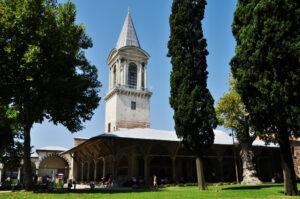
Why was it important? The Second Courtyard was the administrative heart of the Ottoman Empire, where government officials met and many state affairs were managed.
Third Courtyard (Inner Palace)
The Third Courtyard marked the transition from the administrative areas of Topkapi Palace to the Sultan's private domain. Entered through the Gate of Felicity (Babüssaade), it was one of the most exclusive parts of the palace and served as the ceremonial and residential center of the Ottoman court. Many of the palace's most important buildings and collections are located within this courtyard.
What to See in the Third Courtyard
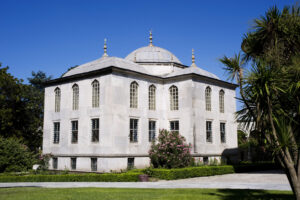

Why was it important? The Third Courtyard formed the ceremonial heart of Topkapi Palace and housed some of the empire's most valuable collections and official reception spaces.
Fourth Courtyard
The Fourth Courtyard served as a private retreat for the Ottoman sultans and their families. Unlike the more formal courtyards below, this area was designed for relaxation, leisure, and enjoying views of Istanbul. Filled with gardens, terraces, and elegant pavilions, it offers some of the most scenic locations within Topkapi Palace.
What to See in the Fourth Courtyard
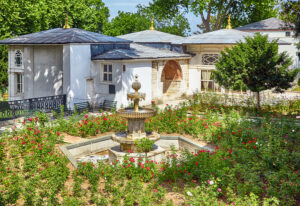

Why was it important? The Fourth Courtyard functioned as the Sultan's private garden and leisure area, combining architecture, nature, and some of the finest views in Istanbul.
Top Bestseller Topkapi Palace Ticket with Harem
Skip the ticket lines and discover the highlights of Topkapi Palace and its legendary Harem on a 90-minute guided tour led by an English-speaking guide. + more details
Top Bestseller Topkapi Palace Ticket without Harem
Save time with guided entry and skip-the-ticket-line access to Topkapi Palace. After a smooth entry with a licensed guide, explore the palace independently using a multilingual audio guide on your smartphone. + more details
Best Istanbul Combo Guided Tours including Topkapi Palace
Explore Istanbul’s most iconic landmarks on a comprehensive 6-hour guided tour. Visit Topkapi Palace and its legendary Harem, then continue to Hagia Sophia and the Blue Mosque with an expert guide. Skip the ticket purchase lines and uncover the fascinating Ottoman and Byzantine history behind these must-see sights. + more details
Save time and simplify your Istanbul sightseeing with one flexible ticket covering three iconic attractions. Skip the ticket lines at Topkapi Palace, Hagia Sophia, and the Basilica Cistern, explore with multilingual audio guides, and use your ticket over 3 days. + more details
Best Value Combo Tickets for Topkapi Palace
Discover two of Istanbul's highlights with this value-packed combo. Enjoy skip-the-line entry to Topkapi Palace, including access to the legendary Harem and a multilingual audio guide, before setting off on a scenic 90-minute Bosphorus cruise. + more details
Explore two of Istanbul's most iconic landmarks with one value-packed combo, featuring skip-the-line access to Topkapi Palace and the Basilica Cistern, multilingual audio guides, and helpful digital city guides. + more details
Save time with one convenient combo ticket to Topkapi Palace and Hagia Sophia, including skip-the-line access, multilingual audio guides, and helpful digital city guides. + more details
Frequently Asked Questions (FAQ) About the Topkapi Palace Courtyards
How many courtyards are in Topkapi Palace?
Topkapi Palace has four main courtyards. These courtyards were designed to organize movement through the palace while reflecting the hierarchy of the Ottoman Empire. Each courtyard served a different function, ranging from public access and administration to royal ceremonies and private leisure.
What are the four courtyards of Topkapi Palace?
The four courtyards of Topkapi Palace are the First Courtyard, Second Courtyard, Third Courtyard, and Fourth Courtyard. Each had a distinct purpose during the Ottoman period.
The First Courtyard served as a public access area, the Second Courtyard functioned as the administrative center, the Third Courtyard contained important ceremonial and residential buildings, and the Fourth Courtyard was reserved for gardens, pavilions, and private leisure spaces.
Which courtyard contains the Tower of Justice?
The Tower of Justice is located in the Second Courtyard of Topkapi Palace. Rising above the surrounding buildings, it served as a symbol of the Sultan's authority and the administration of justice throughout the empire. Today, it remains one of the most recognizable landmarks within the palace complex and can be seen from several areas of the grounds.
Which courtyard contains the Gate of Felicity?
The Gate of Felicity is located between the Second and Third Courtyards and serves as the entrance to the Third Courtyard. Historically, this gate marked the transition into the Sultan's private domain and was one of the most important ceremonial locations within the palace. Important state ceremonies and official events were often held in front of the gate.
What is in the Fourth Courtyard of Topkapi Palace?
The Fourth Courtyard contains some of the palace's most scenic and relaxing spaces. Visitors can see the Baghdad Pavilion, Revan Pavilion, Circumcision Room, Iftar Pavilion, landscaped gardens, and terraces overlooking the Bosphorus. Unlike the more formal courtyards below, this area was designed as a private retreat for the Sultan and members of the royal family.
Can visitors access all four courtyards?
Yes, visitors can generally access all four courtyards of Topkapi Palace. However, certain buildings and rooms located within the courtyards may require additional admission or may occasionally be closed for restoration work. Access policies can change over time, so visitors should check current visitor information before their visit.
Which courtyard is the most important?
There is no single most important courtyard, as each played a different role within the palace. The Second Courtyard was the center of government administration, the Third Courtyard contained many of the palace's most significant ceremonial buildings and collections, and the Fourth Courtyard served as the Sultan's private leisure area. Together, they illustrate the organization and functioning of the Ottoman court.